 En
En  Ar
Ar 
Egyptian authorities continue to expand the use of terrorism designations as a tool of political repression, raising serious concerns about the absence of legal safeguards, due process, and judicial independence.
In this context, the Cairo Criminal Court recently added 108 citizens to its terrorism lists in cases widely viewed as politically motivated. Among those listed is Anas Habib, an activist residing in the Netherlands who has participated in advocacy campaigns critical of the Egyptian government and has publicly called for the closure of Egyptian embassies abroad. Notably, the court did not announce a trial date for those affected by the decision.
In parallel proceedings, the Official Gazette Al-Waqai’ Al-Masriya published a decision extending the terrorism listing of 27 detainees for an additional five years. Those affected include former presidential candidate and head of the Strong Egypt Party Abdel Moneim Aboul Fotouh, as well as Ahmed Khairat Al-Shater, son of a senior Muslim Brotherhood figure. The court also renewed the designation of the Muslim Brotherhood as a terrorist entity in its entirety—triggering sweeping consequences such as asset freezes, travel bans, restrictions on financial transactions, and prohibitions on political and public activity.
Arbitrary Designations and Collective Punishment
Women Journalists Without Chains stresses that the continued addition of individuals to terrorism lists, as well as the routine extension of existing listings, raises profound legal questions regarding the criteria used by Egyptian authorities. These practices appear to function as punitive administrative measures rather than judicial decisions grounded in evidence, transparency, or the right to defense.
This pattern extends to cases involving civilians with no connection to political violence, including football fans associated with Egypt’s Al-Ahly club. According to an appeal submitted by families last week, at least 27 fans remain in detention—some since 2018—on charges linked to their sports-related activism. Families report that their prolonged detention, often without trial, has caused severe psychological and economic hardship and demand an immediate review of their cases.
Despite the non-violent nature of their activities, the fans remain in prolonged pretrial detention under orders of the Supreme State Security Prosecution. Families maintain that attributing terrorism-related charges to sports fandom constitutes an abuse of the law and a violation of the principles of legality and proportionality.
Vague Charges and a System of Repression
These practices form part of a broader pattern documented in the 2015 report “Prisons Without Keys: How Cells Kill Life and Hope in Egypt,” published by Journalists Without Chains. The report revealed that at least 1,160 detainees died in Egyptian prisons over a ten-year period, 74 percent of them as a result of medical negligence. It further estimated that more than 60,000 political prisoners remain incarcerated, including women, children, journalists, and human rights defenders—many held without trial or on vague and overly broad charges.
The organization underscores that Egyptian authorities have systematically relied on legislation such as the Counter-Terrorism Law and Law No. 149 of 2019 regulating civil society to legitimize arrests, suppress dissent, and criminalize peaceful political activity. These laws have effectively transformed the judiciary into a mechanism for managing political opposition rather than administering justice.
Human rights reports indicate that security forces continue to forcibly disappear dozens of activists, protesters, and ordinary citizens, while hundreds remain in detention for periods ranging from one to ten years without access to fair and impartial trials.
The case of Ali Fathi Tahami illustrates the severity of these violations. On December 5, Tahami appeared before the Supreme State Security Prosecution for the first time after five years of enforced disappearance following his arrest in 2020. Despite clear evidence of prolonged incommunicado detention and deteriorating health conditions, the prosecution ordered his detention for an additional 15 days pending investigation. His legal team described the case as a flagrant violation of the constitution, domestic law, and international standards, demanding an investigation into the physical and psychological torture he reportedly endured.
Women Journalists Without Chains notes that many detainees are prosecuted for alleged “promotion of terrorist acts” based solely on political slogans, social media posts, or materials linked to the January 25 Revolution. Lawyers have repeatedly confirmed that they are denied access to case files and indictments, a practice that strips defendants of their fundamental right to defense.
Targeting Journalists and Abuse of State Security Courts
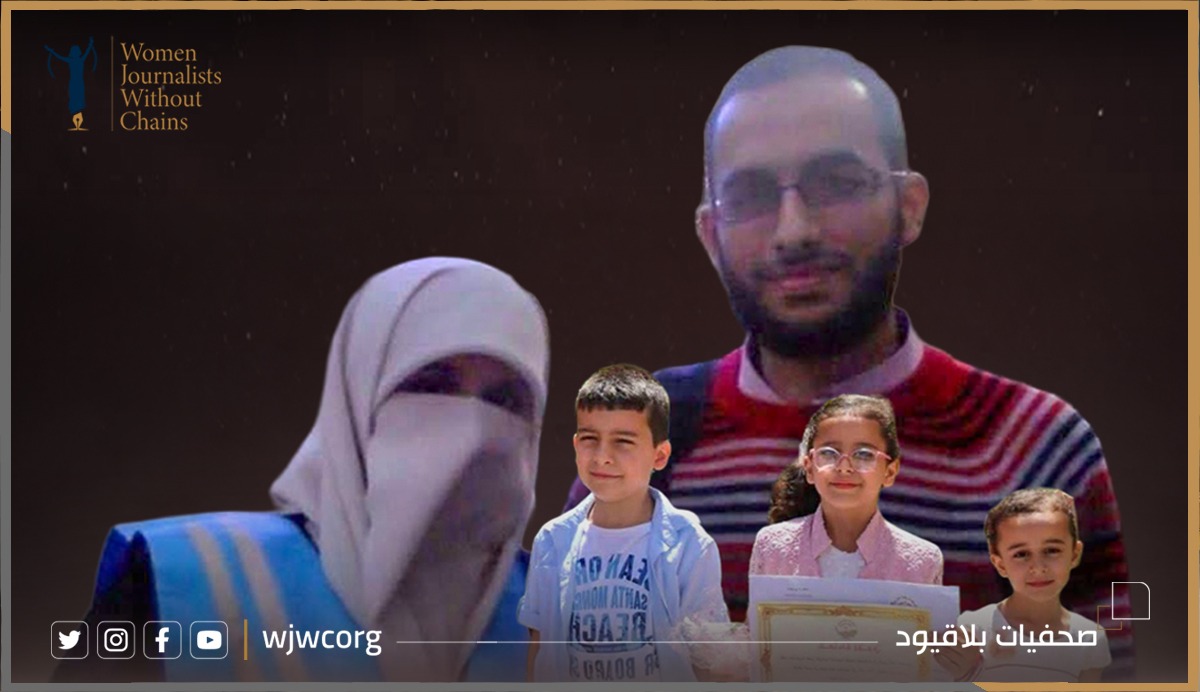
On December 2, the Supreme State Security Prosecution referred 11 defendants, including journalist Yasser Abu Al-Ala and his wife Naglaa Fathi Shamil, to the Terrorism Criminal Court while ordering their continued pretrial detention. Abu Al-Ala was arrested in March 2024 and forcibly disappeared for 50 days before appearing before prosecutors. His wife and sister-in-law were later detained in similar circumstances.
On November 10, 2024, Abu Al-Ala was sentenced to life imprisonment in a case in which the verdict was issued in absentia while he was already in custody—raising serious doubts about the integrity of the proceedings. His subsequent referral to the same court further deepens concerns over conflicts of interest and the erosion of judicial independence.
Charges frequently levied against journalists and activists include “joining an illegal organization,” “financing terrorism,” and “endangering national security,” often based solely on security investigations without material evidence or witness testimony.
Calls for Immediate Action
Women Journalists Without Chains calls for:
· The immediate release of all individuals arbitrarily detained, particularly women, the elderly, and those previously acquitted;
· An end to prolonged pretrial detention and the practice of “judicial recycling”;
· Full access for lawyers to case files and investigations;
· Accountability for officials responsible for enforced disappearance, torture, and due process violations;
· The establishment of an independent fact-finding committee to investigate abuses linked to the misuse of counterterrorism legislation.
As the anniversary of the January 25 Revolution approaches, the organization stresses that Egyptian authorities must demonstrate a genuine commitment to human rights by closing politically motivated cases and releasing those detained solely for exercising their fundamental freedoms.
The continued erosion of basic rights in Egypt represents a grave challenge to the rule of law. Without urgent corrective measures, the use of terrorism designations will remain a central instrument of repression rather than a lawful response to genuine security threats.