 En
En  Ar
Ar Mass Detainee Transfers to Iraq Risk Torture and Sham Trials
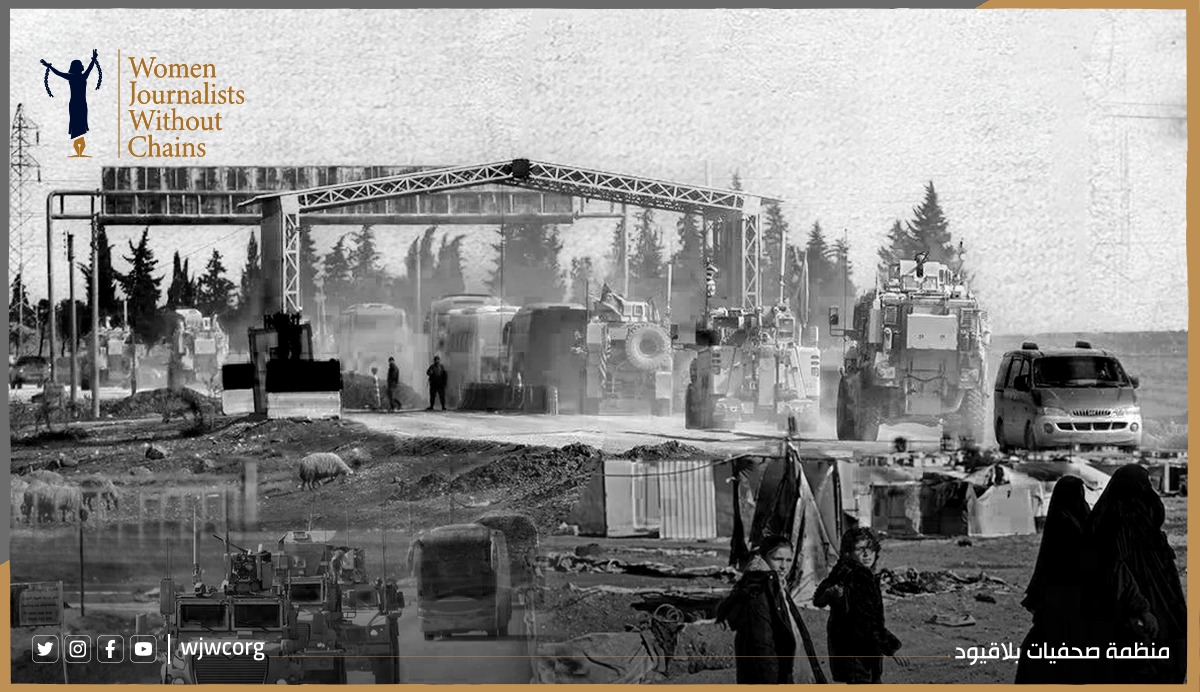
Women Journalists Without Chains expresses grave concern over the mass transfer of approximately 5,700 detainees suspected of affiliation with ISIS from camps and detention facilities in northeast Syria to Iraq since late January.
These transfers, conducted under the U.S.-led Operation Inherent Resolve in coordination with local partners and at the request of the Iraqi government, have placed thousands of individuals into a judicial and security system long documented for systemic due process violations and reliance on coerced confessions.
Most of those transferred are Syrians, Iraqis, and third-country nationals. Authorities currently hold them in Nasiriyah Prison in Dhi Qar, Karkh Prison near Baghdad Airport, and a smaller number in facilities in Sulaymaniyah in the Kurdistan Region of Iraq. The transfers have coincided with rapid military developments in northern Syria and have occurred without independent human rights monitoring or meaningful transparency.
These actions expose detainees to a substantial and foreseeable risk of torture, enforced disappearance, and trials that fail to meet minimum international standards of fairness. The gravity of crimes committed by ISIS between 2014 and 2017 does not relieve states of their binding legal obligations. Justice for victims cannot rest on violations of international law or opaque security arrangements that undermine the rule of law.
Nobel Peace Prize laureate Tawakkol Karman, Chair of Women Journalists Without Chains, stated that regardless of the allegations against these detainees, many have endured years of detention without due process, only to face renewed imprisonment in another jurisdiction that offers insufficient safeguards against torture or extrajudicial execution. She warned that transferring detainees into legal systems known for extracting confessions under torture effectively places them in legal “black holes” and gambles with their lives.
Under Article 3 of the Convention Against Torture, no state may transfer a person to another state where substantial grounds exist for believing that the individual would be in danger of torture. This principle of non-refoulement is absolute. Article 7 of the International Covenant on Civil and Political Rights similarly prohibits torture and cruel, inhuman, or degrading treatment or punishment under any circumstances. States that participate in or facilitate transfers despite credible risk incur responsibility under international law for foreseeable violations.
The absence of independent oversight, the denial of meaningful access for lawyers and international monitoring bodies, and the documented patterns of abuse in Iraqi detention facilities heighten these concerns. Women Journalists Without Chains has previously documented grave abuses in Iraqi prisons, including electric shocks, suspension by limbs, threats of sexual violence, and other forms of coercion used to extract pre-written confessions. Such practices have formed the basis of death sentences in proceedings that lack transparency and fail to meet fair trial guarantees.
Iraq’s Supreme Judicial Council has acknowledged that many detainees were previously held without due process and announced investigations. Among those transferred are individuals accused of serious international crimes, including genocide and the use of chemical weapons. Victims of ISIS atrocities deserve credible and expeditious justice. However, retaliatory proceedings grounded in torture or secret trials undermine accountability, deny victims the truth, and perpetuate cycles of violence.
A further structural obstacle persists. Iraq has yet to adopt comprehensive national legislation criminalizing genocide, crimes against humanity, and war crimes in line with international standards. Current prosecutions rely primarily on the 2005 Anti-Terrorism Law, which focuses on penalizing organizational affiliation and often results in capital punishment, rather than establishing responsibility for specific underlying crimes. This legal framework has limited effective cooperation with international investigative mechanisms and constrained the use of evidence collected under international standards.
The crisis extends beyond transferred detainees. More than 28,000 relatives of suspected ISIS members—primarily women and children—remain detained in Al-Hol and Roj camps in northeast Syria, including approximately 12,500 foreign nationals. These individuals live in precarious and life-threatening conditions, without formal charges, fair procedures, or durable solutions. The continued failure of approximately sixty states to repatriate their nationals and provide lawful, transparent judicial processes at home constitutes a profound abdication of responsibility and prolongs the unlawful deprivation of liberty of thousands of children and women.
Women Journalists Without Chains calls on the United States and all coalition partners to immediately halt further transfers to Iraq where credible risk of torture and unfair trial persists, in full compliance with the principle of non-refoulement. Counterterrorism cooperation does not exempt states from obligations under the Convention Against Torture or other binding norms of international law.
The organization urges the Iraqi authorities to grant the International Committee of the Red Cross and relevant United Nations mechanisms unfettered access to all detention facilities holding transferred detainees, including Nasiriyah, Karkh, and facilities in Sulaymaniyah, and to end the use of torture and coerced confessions. Iraqi authorities should ensure that all prosecutions meet international fair trial standards, guarantee the right to legal counsel, exclude evidence obtained under torture, and uphold transparency in judicial proceedings. Parliament should urgently enact comprehensive legislation criminalizing core international crimes in line with international law to enable credible accountability and meaningful cooperation with international mechanisms.
States whose nationals remain detained in Al-Hol and Roj must immediately repatriate their citizens, especially children, and provide lawful and transparent judicial processes in accordance with their international obligations. Prolonged inaction perpetuates unlawful detention and entrenches conditions that violate fundamental human rights.
Counterterrorism cannot serve as a blank check to erode the absolute prohibition of torture or the right to due process. Upholding the rule of law remains the only sustainable path to justice for victims and to preventing future atrocities. Criminal responsibility for participation in, facilitation of, or complicity in serious violations of international law endures and does not expire with political expediency.
Released by:
Women Journalists Without Chains
February 18, 2026