 En
En  Ar
Ar Lebanon: Israeli Strikes Kill Journalists and Cultural Figures in Escalating Attacks on Civilians
Geneva, April 12, 2026 — Women Journalists Without Chains condemns a series of airstrikes carried out by Israeli occupation forces in Lebanon that have killed two journalists and a prominent poet,
warning that these attacks reflect a dangerous escalation and raise serious concerns regarding potential violations of international humanitarian law.
The organization documented that the strikes carried out by Israeli occupation forces on Wednesday, April 8, resulted in the deaths of three prominent figures:
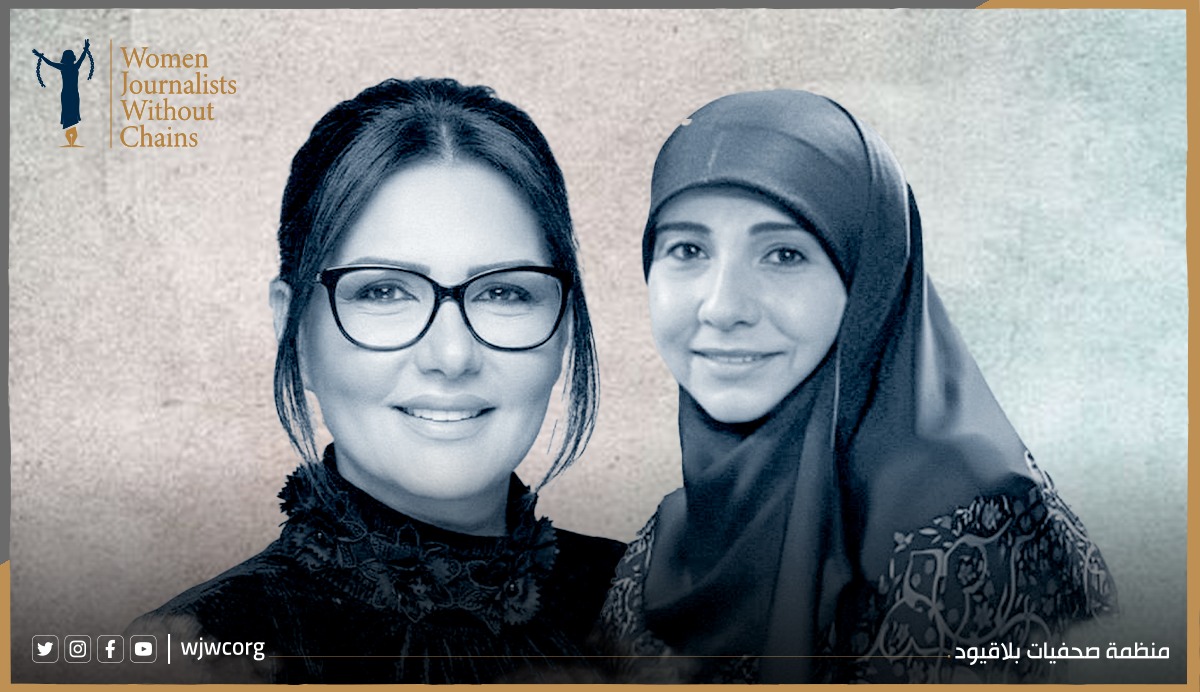
· Khatoun Salma, a Lebanese poet, was killed alongside her husband when an airstrike struck a residential building in the Tallet al-Khayyat area of Beirut.
· Ghada Daikh, a journalist with Sawt al-Farah Radio, was killed in a strike on her home in the southern city of Tyre.
· Suzan Khalil, a presenter and producer for Al-Manar TV, was killed when an airstrike targeted her residence in the town of Kayfoun.
These incidents occurred amid a broader wave of intense bombardment by Israeli occupation forces affecting multiple areas, including Beirut, Baalbek, Tyre, and Sidon. According to figures reported by Lebanese Civil Defense, at least 254 people were killed and 1,165 injured in a single day, underscoring the scale of the violence and its devastating impact on civilians.
Women Journalists Without Chains has documented a series of similar incidents in recent weeks involving the killing of journalists and their family members in strikes on civilian locations by Israeli occupation forces, indicating a troubling pattern.
Among the cases documented by the organization:
· On March 28, journalists Fatima Futouni (Al-Mayadeen) and Ali Shuaib (Al-Manar), along with Mohammad Futouni, were killed when their vehicle was struck near Jezzine.
· On March 18, Mohammad Shreih, a journalist with Al-Manar, was killed alongside his wife and several relatives in a strike on a residential building in Beirut.
· On March 12, photographer Mohammad Shehab and his daughter were killed in Aramoun following an airstrike on their home.
The organization has documented that, since early March, at least eight journalists have been killed in Lebanon, many of them in strikes carried out by Israeli occupation forces that also affected residential buildings and family members.
Women Journalists Without Chains stresses that journalists are protected as civilians under international humanitarian law, including the Geneva Conventions and Article 79 of Additional Protocol I, which explicitly affirms protections for media professionals in conflict zones. The organization further underscores United Nations Security Council Resolution 1738, which calls on all parties to ensure the safety and protection of journalists and media personnel.
The organization warns that repeated attacks by Israeli occupation forces of this nature risk severely undermining independent reporting and restricting the documentation of violations on the ground, particularly when journalists are targeted in civilian settings.
According to data cited by Women Journalists Without Chains, the broader impact of the ongoing escalation has been severe. In Gaza, at least 263 journalists have reportedly been killed since the start of the conflict, along with hundreds of their family members. In Lebanon, more than 20 journalists have been killed and dozens injured in recent months.
The organization also cites reports indicating that, between early March and April 11, more than 2,000 civilians were killed in Lebanon, including children and healthcare workers, reflecting the widening humanitarian toll.
Women Journalists Without Chains calls for urgent international action, urging the United Nations and relevant international actors to move beyond expressions of concern and adopt concrete measures to ensure the protection of civilians and journalists.
The organization further calls for independent, prompt, and transparent international investigations into all incidents involving the killing of media workers, stressing that accountability is essential to ending recurring violations and combating impunity.
“Silence in the face of such violations risks enabling their continuation,” the organization stated. “Targeting journalists—whether directly or through attacks on civilian environments in which they live and work—constitutes a grave threat to the truth and to the public’s right to information. Protecting journalists is a legal obligation and a fundamental pillar of human dignity.”
Author’s Posts
-
Oman: Sweeping Cybercrime Law Criminalizes Expression, Journalism, and Digital Assembly
Jun 23, 2026
-
WJWC Condemns Killing of Palestinian Journalist Ahmed Washah
Yemen: Arbitrary Detention of Lawyer Sabra and Retaliatory Threats Against Family Members
Jun 20, 2026
-
Egypt: Death of Mohamed Sayed Abdelrahim Thrusts Prison Fatalities Crisis Back into the Spotlight
Jun 18, 2026
-
Algeria: Four-Year Prison Sentence of Latifa Dib Condemned as Criminalization of Free Speech
Related Articles