 En
En  Ar
Ar Qahtan’s Enforced Disappearance: A Continuing Crime Demanding International Action
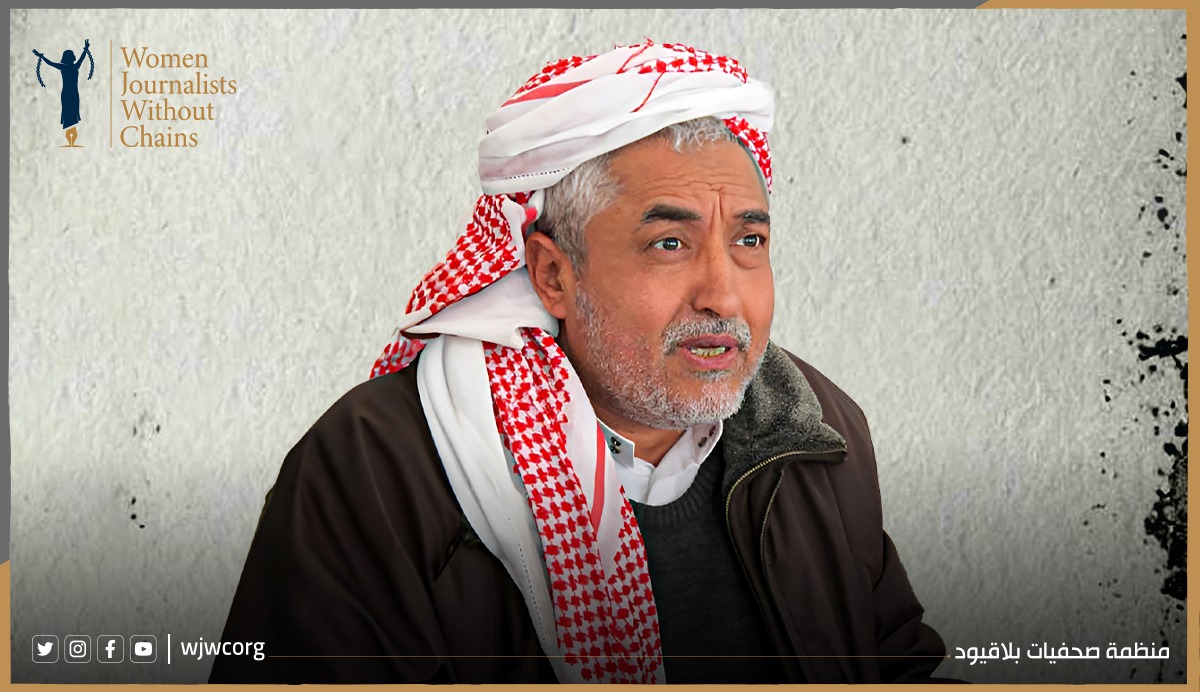
Women Journalists Without Chains stated that the case of abducted Yemeni politician Mohammed Qahtan remains one of the most serious and prolonged cases of enforced disappearance associated with the conflict in Yemen,
amid continued ambiguity surrounding his fate and the persistent failure of international actors to enforce legal obligations requiring disclosure of the fate and whereabouts of disappeared persons and accountability for those responsible.
The organization stressed that the Houthis’ continued manipulation of Qahtan’s fate since his abduction in April 2015—through recurring leaks, contradictory narratives, and the repeated politicization of his case—demonstrates the continuing nature of the crime of enforced disappearance. It further reflects the deliberate use of detainees and disappeared persons as instruments of political bargaining, in clear violation of international humanitarian law and international human rights law.
Women Journalists Without Chains said that the continued treatment of Qahtan’s case as a political negotiation file, despite his status as a victim of enforced disappearance protected under binding international resolutions, foremost among them United Nations Security Council Resolution 2216, constitutes a grave failure in the enforcement of international legal obligations. The organization stressed that the persistence of this situation places serious institutional and moral responsibility on the international community and UN mechanisms to ensure disclosure, accountability, and an end to the ongoing violation.
The organization noted that recent claims alleging Qahtan’s death in an Arab Coalition airstrike in 2015—circulated alongside developments related to the December prisoner exchange agreement—reveal a recurring pattern of exploiting political timing to recycle conflicting narratives concerning his fate. According to the organization, this pattern reflects the systematic use of disinformation and ambiguity to manage the case within political bargaining processes rather than resolving it in accordance with legal and humanitarian obligations.
Women Journalists Without Chains emphasized that these claims fundamentally contradict accumulated evidence and testimonies documented over the years, including Qahtan’s repeated inclusion in successive prisoner exchange negotiations, previous Houthi statements indicating the possibility of his release, and testimonies from former detainees confirming that he remained alive well beyond the date referenced in the circulated narrative.
The organization stated that the continued circulation of contradictory accounts concerning Qahtan’s fate strongly indicates an ongoing policy of concealing the truth regarding his detention and whereabouts. It added that maintaining his case within political negotiations while withholding verified information about his fate demonstrates that the disappearance continues to be treated as a political tool rather than as a grave crime requiring disclosure, accountability, and remedy under international law.
Women Journalists Without Chains further stressed that Qahtan’s case cannot be separated from the broader pattern involving other abductees and forcibly disappeared persons whose fates have repeatedly been linked to negotiation arrangements and exchange processes. The organization warned that the continued use of detainees and disappeared persons as bargaining instruments reflects a systematic approach that undermines binding legal and humanitarian obligations and entrenches impunity.
In this context, the organization referred to the statement issued by Qahtan’s family, which categorically rejected claims that he was killed in a 2015 airstrike. The family cited testimonies from former detainees, including General Faisal Rajab, confirming that Qahtan remained alive in subsequent years, in addition to previous assurances conveyed by mediators regarding his continued survival and possible release.
The family also reaffirmed its rejection of proposals linking Qahtan’s case to political bargaining arrangements, insisting on his immediate and unconditional release and holding the Houthis fully responsible for his enforced disappearance since 2015. The family further called for the formation of an impartial international committee to determine his fate should he not be released immediately.
Women Journalists Without Chains stated that the family’s position further reinforces evidence undermining the circulated death narrative and confirms the continuing nature of the disappearance, as well as the family’s legal right to know the truth regarding Qahtan’s fate and whereabouts.
The organization stressed that the persistence of ambiguity surrounding the case, more than eleven years after Qahtan’s abduction, reflects a grave failure in international handling of one of Yemen’s most prominent enforced disappearance cases. It further reflects a clear shortfall in exerting meaningful pressure to implement relevant international obligations, foremost among them Resolution 2216, which demands Qahtan’s immediate and unconditional release.
Women Journalists Without Chains underscored that Qahtan’s disappearance since April 2015 without any official disclosure of his fate or place of detention, coupled with the continued denial of his family’s right to information and contact, constitutes an ongoing crime of enforced disappearance under international law and may amount to a crime against humanity due to its prolonged and systematic nature.
For her part, the organization’s president, Tawakkol Karman, described the circulated claims regarding Qahtan’s alleged death as “implausible and politically transparent,” warning that promoting such narratives contributes—intentionally or otherwise—to obscuring the crime of enforced disappearance and evading responsibility for it.
Karman affirmed that Qahtan has remained forcibly disappeared by the Houthis throughout the past years and that the group bears full responsibility for his life, safety, and fate. She added: “If this narrative were true, why was it concealed for all these years? Why was his case repeatedly included in negotiations and exchange discussions? The continued manipulation of his fate and his family’s suffering exposes the deliberate exploitation of this case for political bargaining.”
She stressed that the enforced disappearance of Qahtan and other detainees remains among the gravest violations associated with the Yemeni conflict, emphasizing that the truth cannot be concealed indefinitely and that such crimes do not expire under international law.
Women Journalists Without Chains held the Houthis fully responsible for Qahtan’s life and safety, stressing that the continued refusal to disclose his fate or place of detention demonstrates the persistence of the violation and deepens legal and international responsibility for the crime.
The organization further warned that continued international inaction, or the implicit acceptance of linking the case to political negotiations and exchange arrangements, has effectively contributed to prolonging the disappearance and undermining the credibility of international mechanisms tasked with protecting victims and combating impunity.
Women Journalists Without Chains called on the United Nations, the Security Council, the UN Special Envoy to Yemen, and the International Committee of the Red Cross to move beyond merely managing the case politically and take immediate action aimed at ending the violation, compelling the Houthis to disclose Qahtan’s fate and secure his immediate and unconditional release without linkage to political or negotiation arrangements.
The organization also called for the establishment of an independent and impartial international investigation committee under UN supervision, vested with clear legal authority to establish facts, determine individual and institutional responsibility for the enforced disappearance and related violations, and ensure accountability for all perpetrators without exception.
In conclusion, Women Journalists Without Chains affirmed that the continued manipulation of Mohammed Qahtan’s fate reflects a serious erosion in respect for international law and transforms disclosure of the truth from a political matter into an immediate international legal obligation that cannot be deferred or subjected to bargaining under any pretext.
Author’s Posts
-
Oman: Sweeping Cybercrime Law Criminalizes Expression, Journalism, and Digital Assembly
Jun 23, 2026
-
WJWC Condemns Killing of Palestinian Journalist Ahmed Washah
Yemen: Arbitrary Detention of Lawyer Sabra and Retaliatory Threats Against Family Members
Jun 20, 2026
-
Egypt: Death of Mohamed Sayed Abdelrahim Thrusts Prison Fatalities Crisis Back into the Spotlight
Jun 18, 2026
-
Algeria: Four-Year Prison Sentence of Latifa Dib Condemned as Criminalization of Free Speech
Related Articles