 En
En  Ar
Ar International Day of Education: Learning in Safety, Living in Freedom
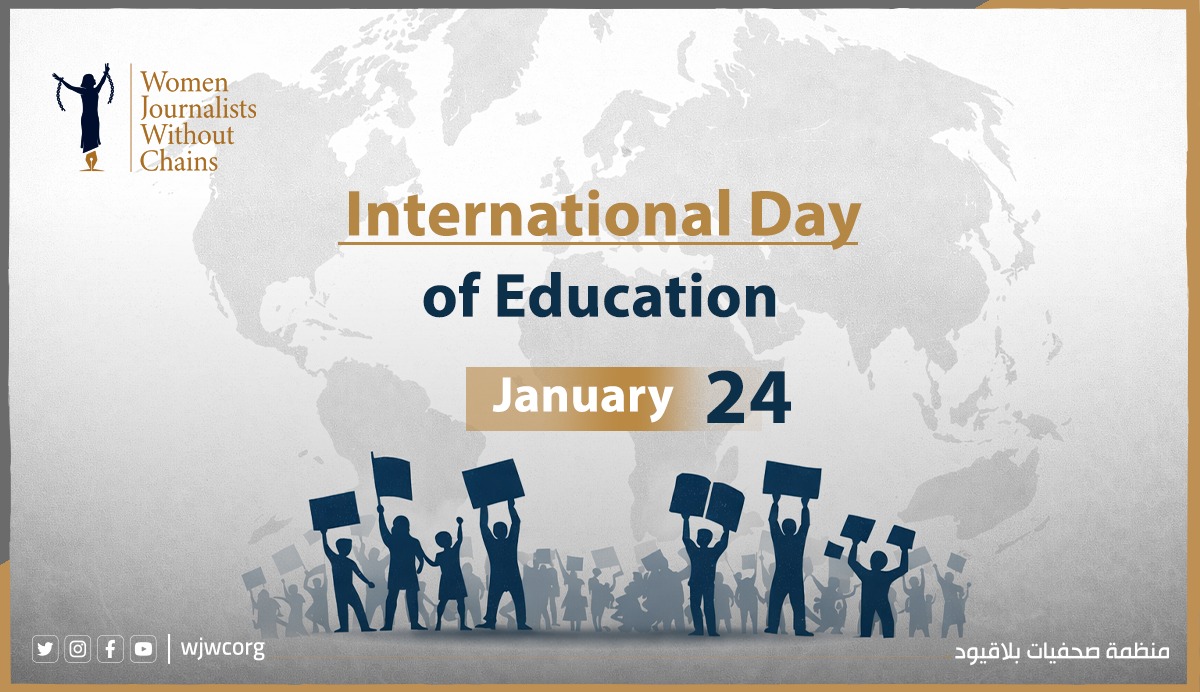
On the International Day of Education, it is reaffirmed that the right to education in much of the Arab world is no longer equally guaranteed under international law.
In many countries, education has shifted from a protected right to a fragile, contested space marked by discrimination and neglect, with the greatest burden falling on children, girls, displaced populations, impoverished families, and communities in conflict and marginalized areas.
Education systems across the region face interconnected crises fueled by poverty, armed conflict, mass displacement, collapsing public services, weak legal protections, chronic underinvestment, politicized curricula, and deliberate attacks on schools. These pressures have deprived millions of children of their right to learn, driven rising dropout rates, entrenched illiteracy, widened the digital divide, and eroded educational quality—placing the future of entire generations in jeopardy.
Protecting education must be more than a symbolic gesture; it is a binding legal and moral duty of states. As a non‑derogable right enshrined in the Universal Declaration of Human Rights, the International Covenant on Economic, Social and Cultural Rights, and the Convention on the Rights of the Child, education requires governments to ensure universal access, equality, quality, and safe learning environments. States must safeguard schools from attack and militarization and guarantee that no child or young person is denied education due to poverty, displacement, or crisis.
Education must be recognized not merely as a means of knowledge transmission or employment preparation, but as a pillar of human dignity, justice, and equality. It is the foundation for forming autonomous, critically minded citizens capable of creativity, innovation, and civic engagement. The education urgently needed in the region is one that liberates minds from fear and dependency, encourages inquiry and independent thought, and cultivates generations equipped to claim their rights and shape their futures with awareness and responsibility.
This statement further underscores that girls across many Arab contexts continue to face compounded and systemic barriers to education. Poverty, discriminatory social norms, early marriage, gender-based violence, and restrictive practices continue to obstruct their access to learning and future opportunities. These barriers perpetuate cycles of inequality and dependency, and pose a long-term threat to social cohesion and sustainable peace.
Economically capable Arab states are called upon to assume their collective responsibility by supporting and investing in education in less-resourced countries as a strategic investment in stability, development, and human security. Such support must be grounded in long-term, sustainable programming that addresses structural causes of educational collapse, rather than short-term, ad hoc, or publicity-driven interventions.
In this context, the removal of administrative and legal barriers related to residency and documentation is imperative, particularly where such restrictions prevent refugee, displaced, and migrant students from accessing higher education. Their right to admission, recognition of qualifications, and uninterrupted study must be guaranteed without delay, discrimination, or exploitation. Denying young people access to higher education due to legal status constitutes a grave violation of the right to education and produces enduring vulnerabilities that undermine social integration and access to dignified work.
There is an urgent need to transform education systems in the Arab region to align with global changes. This requires modernizing curricula, reforming universities, and connecting education to a labor market shaped by technology, artificial intelligence, and digital skills. Young people must be equipped with future-ready competencies, rather than confined to outdated systems that perpetuate unemployment, exclusion, and marginalization.
Key Demands
1. Guarantee free, safe, and inclusive education for all without discrimination, with particular priority given to children in conflict and displacement settings.
2. Protect schools, universities, teachers, and students from attack, and prohibit the use of educational facilities for military or security purposes.
3. Increase public investment in education and improve the financial and professional conditions of teachers as a foundation for meaningful reform.
4. Address school dropout through integrated social and economic support programs for vulnerable families and expanded child protection mechanisms.
5. Ensure full and equal access to education for girls, eliminate practices that obstruct their participation, and provide learning environments free from violence and harassment.
6. Implement urgent national strategies to close the digital education gap and ensure equitable access to internet connectivity and learning technologies in underserved areas.
7. Enable civil society organizations and independent media to monitor education policies and hold authorities accountable without restriction, intimidation, or repression.
Conclusion
Education is the right upon which all other rights depend. The destruction of schools is the destruction of the future. The Arab world will not overcome its accumulated crises unless education is restored to its rightful place as a cornerstone of human security, social justice, and sustainable development—rather than a marginalized or perpetually deferred policy concern.
Released by:
Women Journalists Without Chains
January 24, 2026