 En
En  Ar
Ar Libya’s Detention Crisis: Superficial Reforms, Systematic Crimes, and the Collapse of Accountability
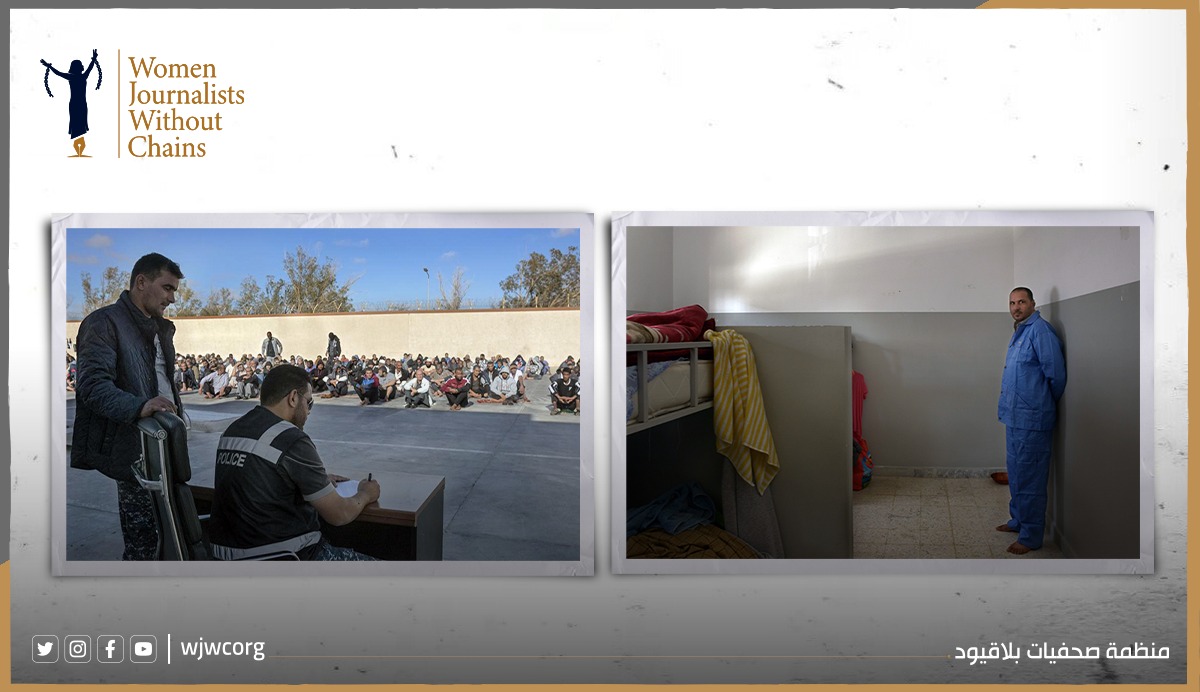
Grave concern persists over the continued international silence in the face of documented crimes of torture and other serious violations committed within detention facilities in eastern Libya.
The recent announcement by the Benghazi-based government appointed by the House of Representatives regarding the formation of a temporary committee to review detention conditions does not constitute a response commensurate with the scale or gravity of these crimes. Nor can it be regarded as a substitute for genuine, independent criminal accountability.
This measure comes belatedly and only after sustained pressure from the United Nations and the international community, following a prolonged record of systematic violations committed in prisons and detention centers under the control of forces loyal to retired General Khalifa Haftar. These violations include arbitrary detention, torture, deaths in custody, and enforced disappearances—conduct that reflects an entrenched pattern of abuse and cannot be dismissed as mere “administrative shortcomings” or isolated misconduct.
While any initiative aimed, in principle, at improving detainee conditions may appear necessary, the establishment of an administrative committee does not absolve the de facto authorities in eastern Libya of their legal responsibility for crimes already committed. Nor does it address the structural drivers of the crisis, including the militarization of detention facilities, the absence of effective judicial and civilian oversight, and the lack of independent monitoring and accountability mechanisms.
Over recent years, United Nations reports and findings by international human rights organizations have repeatedly documented grave abuses in detention facilities across eastern Libya, notably at Al-Kweifiyah and Garnada prisons, Rajma camp, and detention sites operated by the Tariq Bin Ziyad Brigade. These findings reveal a consistent pattern of violations amounting to serious breaches of international human rights law and international humanitarian law.
The Independent Fact-Finding Mission mandated by the Human Rights Council concluded in its October 2021 report that widespread and systematic violations had occurred in areas under Haftar’s control, including detention without judicial warrants, torture, deaths in custody, and enforced disappearances. These conclusions confirm that the crisis is not rooted in procedural failure, but in an entrenched system of repression.
In June 2022, Amnesty International further documented that the Tariq Bin Ziyad Brigade committed acts amounting to war crimes, including torture and sexual violence. Such conduct falls squarely within the category of international crimes requiring independent investigation and criminal prosecution, rather than cosmetic measures that leave power structures and chains of command intact.
In May 2024, the United Nations Support Mission in Libya renewed its focus on these violations following the death of activist Siraj Dughman while arbitrarily detained at Rajma camp, calling for an independent and transparent investigation. To date, this demand has not been meaningfully implemented, underscoring the persistence of impunity and the absence of genuine political will to deliver truth and justice to victims.
The timing of the committee’s formation appears closely linked to escalating international pressure, the anticipated release of a new report by the United Nations Panel of Experts on Libya, and increasing scrutiny by the International Criminal Court regarding detention-related crimes and pathways to accountability. This raises serious concern that the initiative is intended to contain pressure and project an image of “reform” without dismantling the structures that enable torture and abuse.
Responsibility does not rest solely with local authorities aligned with Haftar. It also extends to states that provide political, military, and financial support—most notably the United Arab Emirates—whose sustained backing has entrenched a repressive security apparatus beyond meaningful oversight, facilitating the continuation of serious violations without accountability.
Such support may engage indirect responsibility under international law, particularly in light of the prior knowledge established through credible UN and human rights reports documenting systematic abuses. This imposes clear legal and moral obligations on supporting states to immediately cease assistance that sustains the machinery of abuse.
There is a serious risk that formal committees may serve to whitewash human rights records and absorb international criticism unless accompanied by binding and verifiable measures, including in particular:
· placing all detention facilities under independent judicial and civilian oversight;
· the immediate release of all individuals arbitrarily detained without judicial warrants;
· independent criminal investigations into all cases of torture and deaths in custody;
· accountability, without exception, for military and security leadership responsible;
· granting United Nations mechanisms and human rights organizations unrestricted access to all detention facilities.
The detention file in eastern Libya represents one of the most serious and extensively documented crime dossiers in the country. Any credible response must begin with recognition of the scale of violations and the rights of victims to truth, justice, and reparation—rather than denial or political and procedural evasion.
Impunity is no longer sustainable. Continued international silence or reliance on superficial measures only deepens victims’ suffering and undermines any meaningful path toward justice and the rule of law in Libya.
Issued by:
Women Journalists Without Chains
January 13, 2026