 En
En  Ar
Ar Tunisia: Systematic Assault on Judicial Independence and the Silencing of Dissent
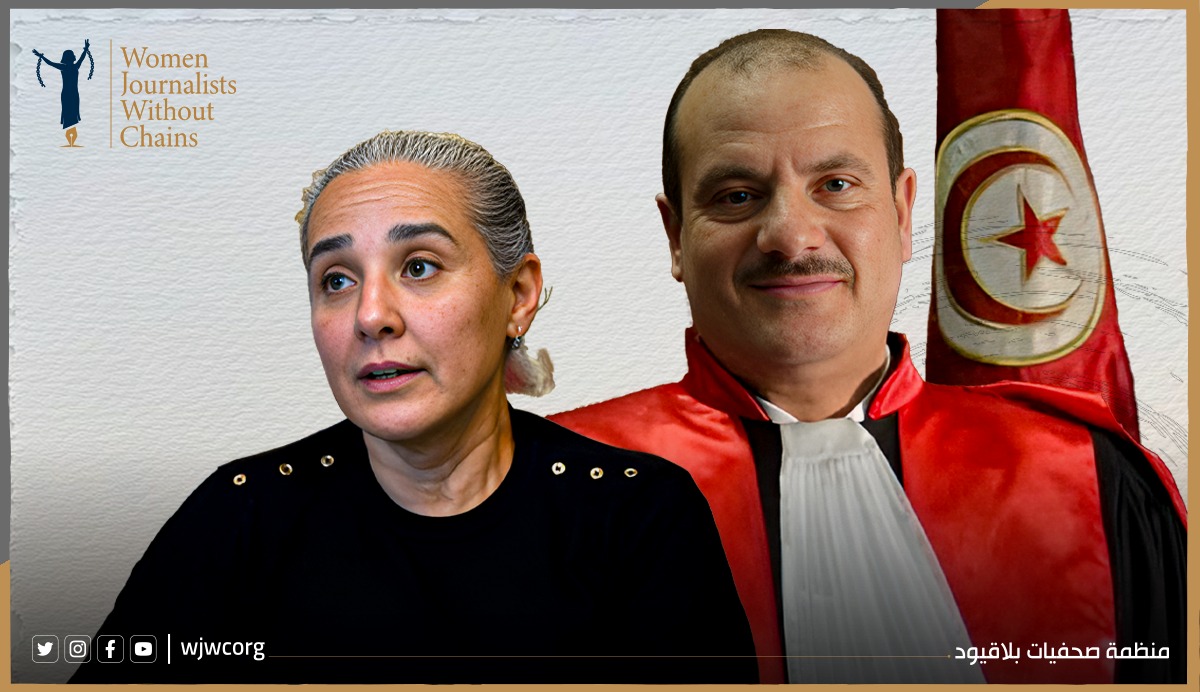
The dangerous escalation of repression by Tunisian authorities against judges, lawyers, and independent judicial voices has drawn strong condemnation from Women Journalists Without Chains (WJWC).
The wave of arbitrary arrests, prosecutions, and sustained targeting of those defending the rule of law represents an advanced stage in the systematic dismantling of judicial independence and a calculated attempt to subordinate constitutional institutions, the public sphere, and the entire human rights ecosystem to executive hegemony.
We stand in absolute solidarity with the protest actions, sit-ins, and strikes undertaken by Tunisian judges and lawyers. Their courageous mobilization in defense of judicial independence, the right to a fair defense, and democratic institutional integrity constitutes a vital bulwark against authoritarian consolidation.
The Weaponization of Justice
WJWC highlights several alarming indicators of this deepening institutional crisis:
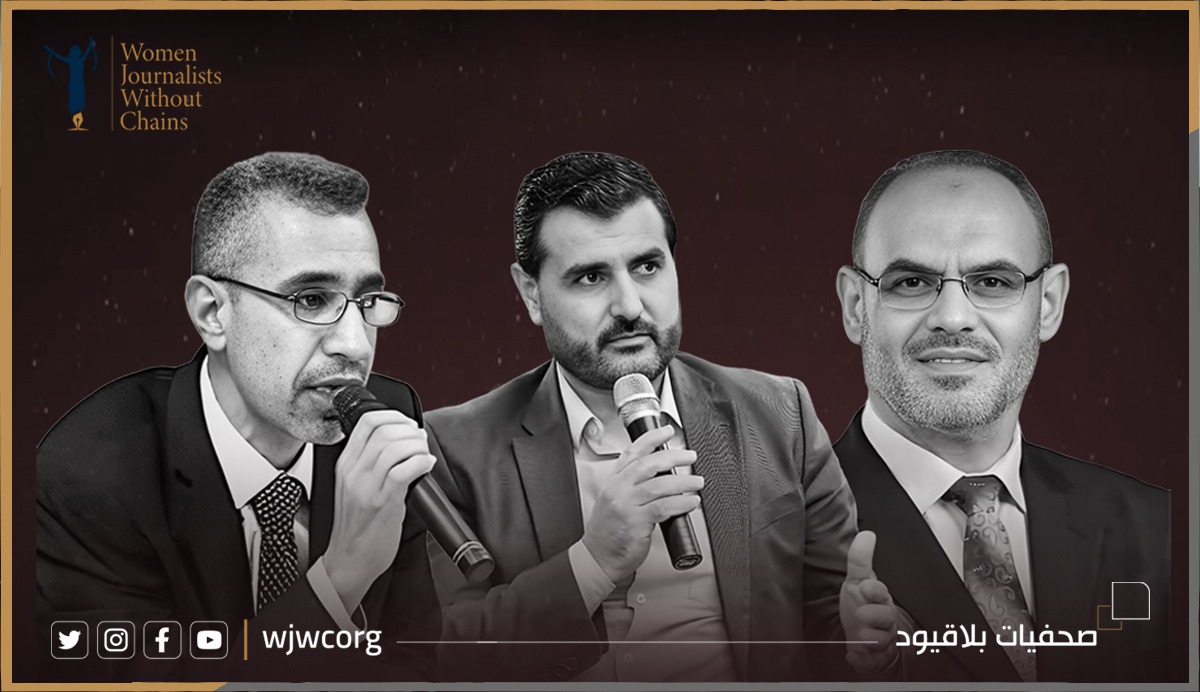
The Persecution of Judge Anas Hmaidi: The ongoing prosecutions and retaliatory judicial rulings against the President of the Tunisian Judges Association—solely on account of his legitimate union advocacy and defense of judicial independence—demonstrate with stark clarity how the judiciary is being instrumentalized as a punitive tool against independent jurists and as a mechanism to intimidate those resisting political interference.
The Sentencing of Sonia Dahmani: We vehemently condemn the initial two-year prison sentence imposed on lawyer and journalist Sonia Dahmani for public remarks critiquing prison conditions. Her case epitomizes a systematic state policy aimed at criminalizing freedom of expression and targeting journalists, defense attorneys, opposition figures, and human rights defenders through the strategic misuse of exceptional legislation.
Retaliatory Administrative Measures: We echo the grave concerns raised by the Tunisian Judges Association regarding the Ministry of Justice's deployment of "work memoranda" as punitive instruments to forcibly transfer and penalize judges based on their professional impartiality or union activities. We characterize such practices as a flagrant violation of constitutional and legal guarantees of judicial independence and impartiality.
A Trajectory of Democratic Erosion
These developments cannot be disaggregated from the political trajectory initiated on 25 July 2021, which witnessed the suspension of parliament, the dissolution of the Supreme Judicial Council, and the issuance of exceptional decrees conferring sweeping executive powers over judicial, legislative, and administrative institutions. This centralization was consolidated by the 2022 Constitution, which systematically hollowed out oversight mechanisms, weakened the separation of powers, and institutionalized presidential absolutism.
Furthermore, Tunisian authorities continue to abuse exceptional legislation—most notably the draconian Decree 54 concerning information and communication systems crimes—to aggressively prosecute journalists, lawyers, opposition figures, bloggers, and human rights activists. This practice stands in flagrant contravention of Tunisia's international treaty obligations regarding freedom of expression, fair trial guarantees, and judicial independence.
What we are witnessing is an expansion of state repression that no longer targets political opponents alone, but now encompasses the entire ecosystem of accountability: judges, lawyers, civil society organizations, human rights associations, and the press. This policy aims to forcibly reshape the public sphere around absolute loyalty and exclusion, effectively dismantling pluralism and silencing independent voices.
Institutional Position
"Judicial independence is not a privilege granted to the bench; it is the foundational guarantee for the protection of human rights, the preservation of equity, and the very possibility of justice. To dismantle the judiciary is to pave the way for unchecked state impunity and the total collapse of the rule of law."
— Women Journalists Without Chains
We caution that the continued targeting of the judiciary, legal profession, media, and civil society threatens what remains of democratic safeguards in Tunisia and risks returning the country to the climate of repression, fear, and executive overreach that prevailed prior to the 2011 revolution.
Demands Aligned with International Human Rights Principles
In accordance with our mandate and international legal obligations, Women Journalists Without Chains calls upon Tunisian authorities to take immediate action as follows:
|
Demand |
International Legal Principle |
|
Immediately and unconditionally release all prisoners of conscience detained for their opinions or political, human rights, and media activities |
The Right to Liberty and Security of Person (UDHR Art. 3; ICCPR Art. 9) |
|
Cease the weaponization of the judiciary to persecute, intimidate, and eliminate political opponents, journalists, lawyers, and activists |
The Right to a Fair Trial and Judicial Independence (UDHR Art. 10; ICCPR Art. 14; UN Basic Principles on the Independence of the Judiciary) |
|
Restore absolute respect for judicial independence and halt all executive interference in the career paths, transfers, and tenures of judges |
The Independence of the Judiciary (ICCPR Art. 14; UN Basic Principles on the Independence of the Judiciary) |
|
Guarantee the unhindered right to defense, ensuring that lawyers can practice their vital profession safely and without fear of state reprisal or physical violation |
The Right to Counsel and Defense (UDHR Art. 11; ICCPR Art. 14(3)(b); UN Basic Principles on the Role of Lawyers) |
|
Repeal or substantially revise all restrictive and exceptional legislation, particularly Decree 54, to bring domestic law into full compliance with international standards on freedom of expression |
The Right to Freedom of Expression (UDHR Art. 19; ICCPR Art. 19) |
|
Halt the systematic targeting of civil society organizations, independent media outlets, human rights associations, journalists, and activists |
The Right to Freedom of Association and Peaceful Assembly (UDHR Art. 20; ICCPR Arts. 21–22) |
|
Fully uphold Tunisia's international commitments under the International Covenant on Civil and Political Rights and other global human rights instruments |
The Obligation to Respect and Ensure Human Rights (ICCPR Art. 2; Vienna Convention on the Law of Treaties) |
Released by:
Women Journalists Without Chains
May 28, 2026