 En
En  Ar
Ar 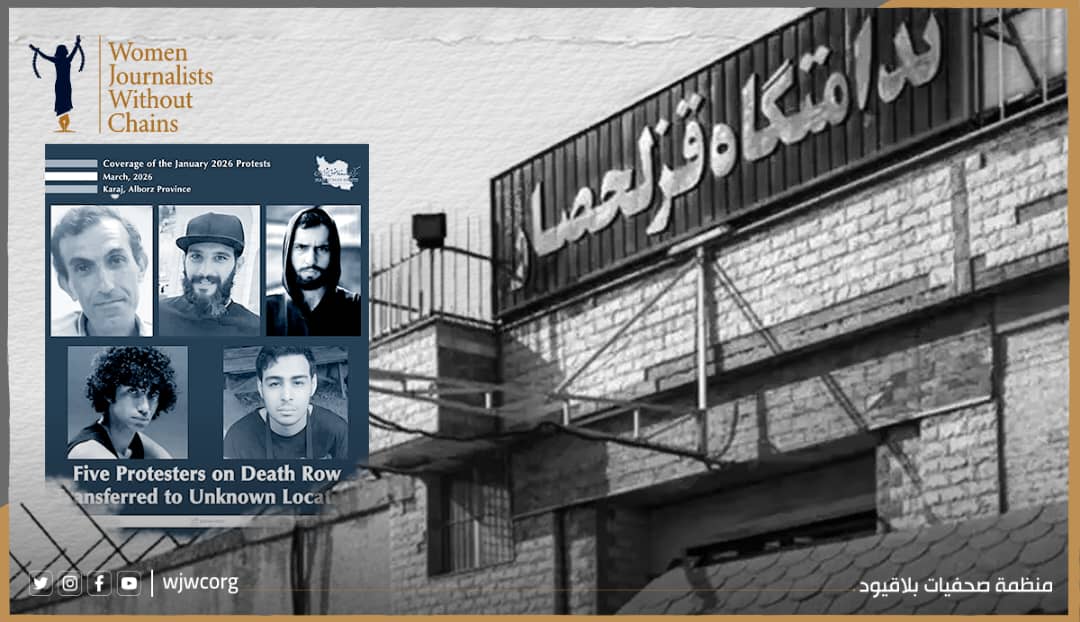
Women Journalists Without Chains expresses its profound shock at verified reports from Qezel Hesar Prison in Alborz Province confirming that Iranian authorities have carried out a secret and sudden wave of executions within the past 24 hours (30–31 March 2026).
At least four political detainees were executed without prior notice, while seven others now face imminent execution in the same facility.
The organization affirms that the secret execution of Babak Alipour, Pouya Ghobadi, Akbar (Shahrokh) Daneshfar Kar, and Mohammad Taghavi Sangdehi—without notifying their families or lawyers—constitutes a crime against humanity and a flagrant violation of the right to life. According to credible reports, the victims were denied a final farewell, and authorities have refused (as of 1 April) to hand over the bodies of three of them, compounding the families’ suffering and violating basic humanitarian norms.
Field documentation indicates that the executions were carried out under conditions of total blackout, with prison authorities cutting communication channels to political wards before the killings began. This created widespread panic among hundreds of detainees. This pattern of “snatch executions” evokes some of the darkest periods in the history of the Iranian judiciary, where lives were extinguished based on security‑driven obsessions that exploit wartime conditions to override the rule of law.
These repressive measures reflect the regime’s determination to use the death penalty as a tool of political intimidation, settling scores with opponents away from public scrutiny. The timing strongly suggests that authorities are exploiting the chaos of war to push through unjust rulings that lack even the most basic elements of due process.
The ongoing war has already resulted in the deaths of 1,574 Iranian civilians, including at least 236 children, according to credible human rights documentation of casualties since the United States and Israel launched military operations against Iran on 28 February.
Ms. Tawakkol Karman, President of Women Journalists Without Chains and 2011 Nobel Peace Prize laureate, stated: “It is unacceptable that at a time when the Iranian people are burdened by war, mourning, and continuous airstrikes, the authorities of the Islamic Republic continue to politicize the death penalty and use it as a strategic weapon to uproot opposition voices and instill terror among civilians.”
She added: “The authorities’ resort to physically liquidating their own citizens under these exceptional circumstances reflects an opportunistic exploitation of the ‘fog of war’ and the world’s preoccupation with armed conflict. These arbitrary executions deepen the suffering of a population caught between the hammer of external war and the anvil of the internal guillotine.”
Fears of Imminent Execution of Protesters and Political Opponents
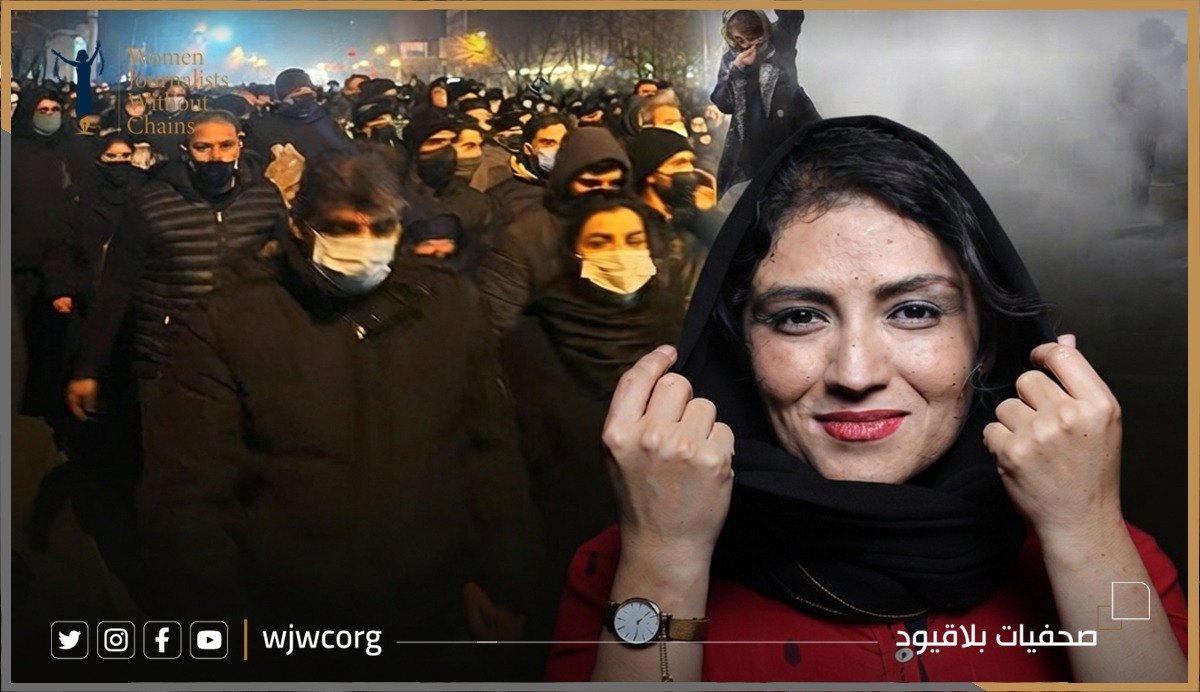
Women Journalists Without Chains expresses grave concern for the lives of seven Iranians, including five young protesters from the January 2026 demonstrations, who were transferred on 31 March to solitary confinement—a customary precursor to execution. They are: Mohammad Amin Biglari, Ali Faheem, Abolfazl Salehi Siavashani, Amir Hossein Hatami, and Shahin Vahidbarast Kolu.
These young men were subjected to unjust trials before the Revolutionary Court in Tehran and sentenced to death on vague charges such as moharebeh (“enmity against God”) for their participation in peaceful protests.
In addition, Vahid Bani Amerian and Abolhassan Montazer, two political opponents, face imminent danger after being transferred to an unknown location on the same day as the executed detainees. All were convicted of baghy (“armed insurrection”) based on accusations of affiliation with opposition groups—charges they consistently denied in court.
The speed of these trials—some lasting only hours—and the lack of transparency confirm that the purpose of these proceedings is not justice but sending a bloody message to Iranian society to suppress any aspiration for change.
Information also indicates that 14 additional political detainees from Section 4 of Qezel Hesar Prison have been transferred to an unknown location, raising fears of a broader execution campaign under the cover of war.
Since the conflict began, Iranian security forces and the Basij have arrested dozens of citizens, including January protesters, on charges of treason and moharebeh—offenses that carry the death penalty. Executions are being carried out in secrecy, as demonstrated over the past two days.
Ms. Karman stated: “The continuation of this bloody path places the international community before its historical and moral responsibilities. It cannot remain a spectator to a judicial massacre committed under the cloak of law and in the name of false justice.”
She added: “A state of war does not grant the authorities a blank check to violate international covenants or shirk their legal responsibility to protect the lives of their citizens.”
Legal Classification
From a legal standpoint, these executions constitute extrajudicial killings, as they emanate from courts that lack independence and impartiality. As a state party to the ICCPR, Iran is obligated under Article 6 to ensure that no individual is arbitrarily deprived of life—an obligation systematically violated through death sentences imposed in cases that do not meet the threshold of ‘most serious crimes.’
The trials also violated Article 14 of the ICCPR, as defendants were denied adequate time to prepare a defense, denied access to independent lawyers, and convicted based on secret security reports. Revolutionary Courts routinely refuse to hear defense witnesses or examine exculpatory evidence, rendering their rulings devoid of legal legitimacy.
Domestically, the authorities have unjustly expanded the interpretation of moharebeh and baghy to include peaceful protest or mere presence near demonstrations, violating the principle of legality (nullum crimen, nulla poena sine lege). This politicization of criminal law empties the Iranian constitution of its protective content.
The refusal to hand over bodies or disclose burial sites constitutes enforced disappearance and inhuman treatment of families, prohibited under international law. This conduct exposes responsible officials to international criminal liability for crimes against humanity.
Coercive Detention Conditions
Women Journalists Without Chains notes that detainees were subjected to severe torture, prolonged solitary confinement, and threats against family members to extract forced confessions later broadcast on state media. These coerced confessions formed the sole basis for death sentences issued by Judge Salavati in Qezel Hesar Prison.
The media blackout and communication cuts represent a deliberate attempt to conceal violations from global scrutiny. Yet these abuses are being documented, and the Iranian judiciary has failed to demonstrate the legitimacy of its rulings.
Judges’ disregard for visible signs of torture and their reliance on televised confessions demonstrate that the judiciary functions as a tool of repression, not justice. The refusal to investigate torture allegations represents a grave deviation from the principles of truth and accountability.
Ms. Karman stated: “Using the death penalty in cases related to opinion and peaceful assembly constitutes arbitrary deprivation of life. Characterizing civil protest as hostility against the divine or the state is a legal fallacy aimed at intimidating society and silencing dissent.”
Urgent Demands
In light of the grave and accelerating violations documented above, Women Journalists Without Chains issues the following urgent and non‑negotiable demands:
To the Authorities of the Islamic Republic of Iran
- Immediately halt all executions, including those scheduled or anticipated, and announce a moratorium on the death penalty.
- End the use of solitary confinement as a pre‑execution measure and return all detainees to regular wards.
- Grant unrestricted access to independent lawyers, UN mechanisms, and international human rights organizations to meet detainees, review case files, and monitor detention conditions.
- Reopen all death‑penalty cases in transparent, public proceedings that meet international standards of fairness and due process.
To the United Nations Human Rights Council and the UN General Assembly
- Exert maximum diplomatic and legal pressure on Tehran to halt this political “guillotine,” recognizing that silence will be interpreted as a green light for further killings.
- Convene an urgent session to address the escalating pattern of secret executions and mandate enhanced monitoring of detention facilities.
To the International Community
- Impose targeted sanctions on judges, prosecutors, security officials, and prison administrators involved in issuing or implementing arbitrary death sentences.
- Ensure that these executions are incorporated into the ongoing investigations of the UN Fact‑Finding Mission on Iran, covering violations from the 2022 protests through 2026.
- Preserve and secure all available evidence to enable future international accountability for crimes against humanity.