 En
En  Ar
Ar Escalating Attacks on Health Infrastructure Signal Looming Humanitarian Collapse in Lebanon
Beirut – April 8, 2026 — A rapidly intensifying pattern of Israeli military operations in southern Lebanon is driving the systematic degradation of the country’s health sector,
raising urgent alarm among human rights actors over the risk of an imminent humanitarian collapse affecting hundreds of thousands of civilians.
In a detailed assessment, Women Journalists Without Chains documented what it described as a sustained and deliberate campaign targeting medical personnel, ambulances, and healthcare facilities—acts that appear to contravene core protections enshrined in international humanitarian law. The organization emphasized that these incidents reflect not sporadic violations, but a discernible operational pattern aimed at disabling essential civilian infrastructure and obstructing access to lifesaving care.
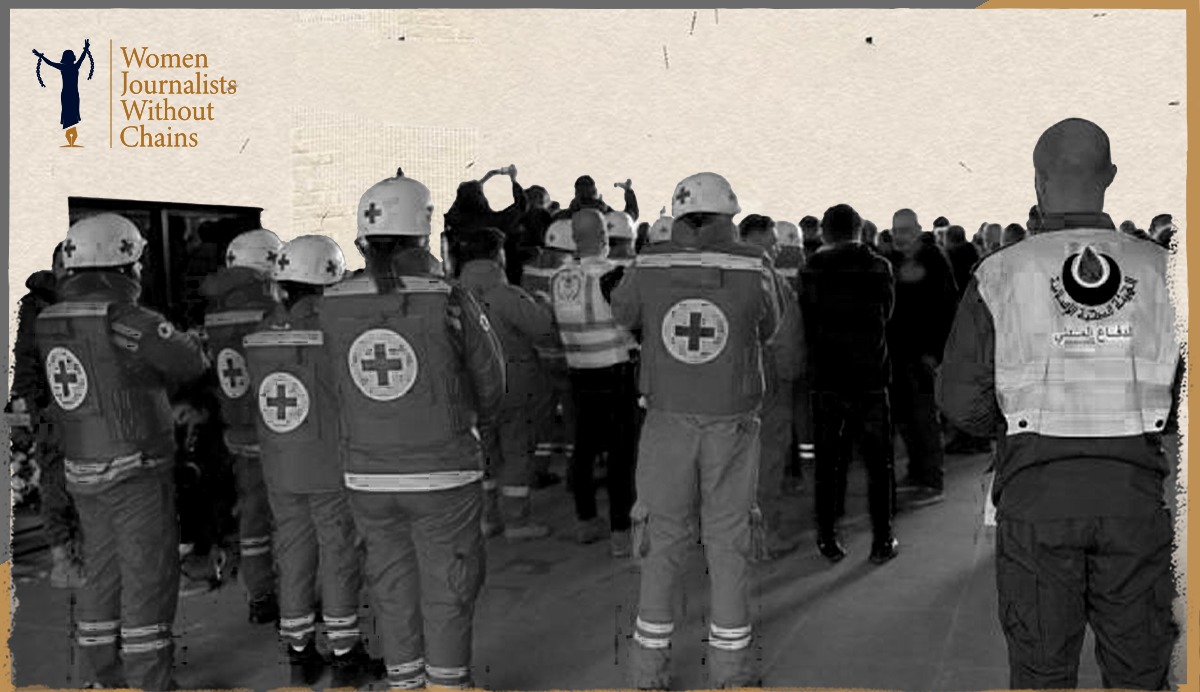
Between March 2 and April 5, at least 56 paramedics were reportedly killed, while multiple hospitals and medical centers were rendered non-operational. On April 5 alone, three paramedics lost their lives in separate attacks while carrying out rescue missions—two in a direct strike on a response team in Haris, Bint Jbeil district, and a third in an attack targeting a medical crew in Sidiqeen, Tyre district.
Official data released by the Lebanese Ministry of Health further corroborates the scale and intensity of the crisis. In a report issued on April 3, the Ministry documented the killing of 53 healthcare and paramedic personnel and the injury of 137 others within a single month, all while on active duty. The report also recorded dozens of attacks against medical infrastructure, including health centers and emergency response units.
Since early March, the broader escalation has inflicted a severe toll on civilians. By April 6, at least 1,497 individuals had been killed, thousands more injured, and no fewer than 816,000 civilians forcibly displaced amid sustained aerial bombardments and expanding military operations.
Health System Under Siege
Women Journalists Without Chains warns that the healthcare system in southern Lebanon is undergoing a phase of acute and unprecedented deterioration. Several hospitals have been forced to cease operations entirely due to direct strikes or escalating security threats, while others remain only partially functional under extreme resource constraints. Available data indicates that at least six hospitals have shut down completely, with nine additional facilities sustaining significant structural damage.
Medical institutions have reportedly received repeated evacuation warnings, compelling administrators to suspend services or drastically curtail operations. In many instances, only emergency and surgical units remain operational, leaving large segments of the civilian population without access to essential and routine medical care.
Lebanese health authorities have reiterated that hospitals constitute protected civilian objects under international law, stressing that any targeting or intimidation of such facilities constitutes a grave violation that cannot be justified under any circumstances.
Attacks on Medical Personnel and Transport
The targeting of medical teams and transport has emerged as a particularly grave dimension of the current escalation. Between March 2 and April 3, the Ministry of Health documented at least 82 attacks on relief organizations, 20 health centers, and 89 ambulances.
Among the most severe incidents, airstrikes in mid-March struck a Ministry of Health facility in Bint Jbeil, killing 12 medical staff—including doctors, nurses, and paramedics—while injuring others. On March 28, a series of coordinated strikes resulted in the deaths of nine paramedics and injuries to seven others across multiple healthcare sites in southern Lebanon.
Israeli allegations regarding the alleged misuse of ambulances for military purposes have been categorically rejected by Lebanese authorities, who affirm that medical transport operations are conducted in strict compliance with international humanitarian law. Human rights organizations caution that such claims risk being invoked to legitimize further attacks on protected medical assets.
Systematic Degradation of Civilian Infrastructure
According to Women Journalists Without, the current wave of attacks reflects a continuation of a broader pattern observed since October 2023, characterized by the systematic dismantling of healthcare capacity and the deliberate exacerbation of humanitarian conditions. The cumulative impact has resulted in acute shortages of fuel, medicines, medical supplies, food, and potable water, significantly constraining the delivery of critical services.
The organization warned that the destruction of health infrastructure is directly contributing to rising mortality rates, increased risk of disease outbreaks, and the creation of coercive conditions that may force large-scale population displacement, particularly in already vulnerable southern areas.
Legal Concerns and Accountability Imperatives
International humanitarian law affords explicit protection to medical personnel, facilities, and transport. The Geneva Conventions prohibit attacks against healthcare services except under narrowly defined and exceptional circumstances, and only following adequate warning. The deliberate targeting of such entities may constitute war crimes under the Rome Statute of the International Criminal Court.
Legal experts and human rights advocates have underscored that the documented pattern of attacks raises serious concerns regarding violations of the principles of distinction and proportionality—cornerstones of lawful conduct in armed conflict.
In response, Women Journalists Without Chains has called for the immediate cessation of all attacks against civilian infrastructure, with particular emphasis on the protection of healthcare facilities, medical personnel, and ambulances. The organization further urged the establishment of an independent, transparent international investigative mechanism to examine alleged violations, ensure accountability, and prevent entrenched impunity.
It also called on the international community, including the United Nations and humanitarian actors, to take urgent and coordinated measures to halt ongoing violations, guarantee the safe and unimpeded delivery of humanitarian and medical assistance, and provide critical support to Lebanon’s collapsing health system to sustain lifesaving services for affected populations.