 En
En  Ar
Ar Egypt: Fatal Medical Neglect and the Tragic Case of Dr. Amr Abdelnaby

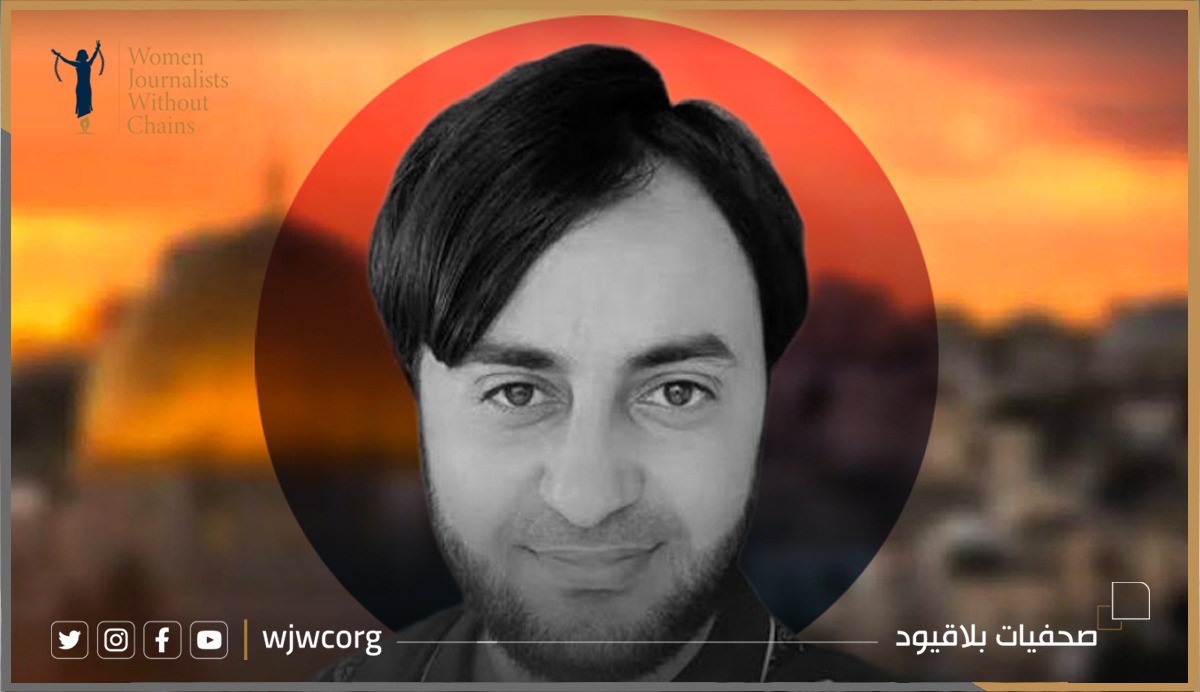
Dr. Amr Abdelnaby Heikal died inside an Egyptian prison on 11 July 2026, following years of enforced disappearance and arbitrary detention. Authorities had arrested Dr.
Amr Abdelnaby alongside his wife, Dr. Dina Abdelrahman, and their son in 2020. He subsequently endured enforced disappearance for several years, during which his family and lawyers were denied any knowledge of his whereabouts or ability to communicate with him. Throughout that period, his children lost parental care and moved to live with their grandfather. Dr. Dina Abdelrahman emerged after years of enforced disappearance in a prison facility, having lost speech and cognitive function according to human rights documentation—a condition attributed to harsh detention conditions and inhumane treatment.
Dr. Amr Abdelnaby remained forcibly disappeared until appearing for the first time before the Supreme State Security Prosecution in September 2024, nearly four years after he had gone missing. Authorities investigated him on politically motivated charges, including membership in a group, financing it, and espionage, before placing him in 10th of Ramadan Prison.
The death of Dr. Amr Abdelnaby forms part of a sustained pattern of lethal violence and medical neglect against detainees in Egypt. Over the past month, no fewer than five deaths have occurred inside Egyptian places of detention:
· Mohammed Sayed Abdelrahim, youth secretary of the Freedom and Justice Party in Port Said Governorate, died inside Badr Prison on 17 June 2026, following a deterioration in his health, after twelve years in detention.
· Ayman Ramzy Botros died inside Rod El-Farag Police Station following detention over social media posts in which he criticized the church to which he belonged, amid human rights reports that authorities subjected him to enforced disappearance and denied him legal safeguards and healthcare.
· Sayed Kamel Haddad, 52, died inside Al-Minya Liman Prison following a heart attack, with human rights sources stating that the medical response to him was delayed.
· Gamal Abdel Nasser, 27, died while in detention. Human rights accounts circulated information that he died inside Badr Police Station, while the Ministry of Interior stated that he died in hospital due to health complications related to addiction, and denied that he was subjected to any assault.
· Ibrahim Mohammed El-Mahdy died inside Borg El-Arab Prison, an incident following which his family demanded an independent autopsy, stating that they had observed marks they described as indicative of torture, and refused to receive the body before the cause of death was independently determined.
The detention of two academics, Dr. Essam Hashish and Dr. Sherine Shawky, further illustrates the crisis. Dr. Hashish, 71, suffers from severe deterioration of his heart valves, chronic heart dysfunction, and high blood pressure. His condition worsened following a heart attack in 2024, amid human rights reports confirming that he is denied the specialized treatment he requires. Dr. Sherine Shawky faces serious health deterioration, including severe anemia, heart and liver disease, and spinal disc herniation, with warnings that she may lose mobility if treatment continues to be delayed.
The continuation of pre-trial detention in publishing cases, alongside politically motivated trials, raises serious concerns regarding respect for fair trial guarantees. Egyptian authorities use the Terrorism Law No. 94 of 2015 and the Civil Work Regulation Law No. 149 of 2019—which contain vague definitions and broad powers—against government opponents and critics, and to impose wide restrictions on civil society and silence journalists and activists.
A June 2025 report documented the conditions of political detainees since 2013, noting that 1,160 detainees died over ten years, 74% of them due to medical neglect, while more than 60,000 political detainees remain in custody, many without fair trials or based on vague charges.
The protection of the right to life and healthcare for detainees represents a legal obligation incumbent upon the State, pursuant to the provisions of the Egyptian Constitution, which guarantees human dignity, prohibits torture and ill-treatment, and obligates the provision of healthcare to citizens, as well as the Prisons and Rehabilitation Centers Regulation Law, which mandates the provision of medical services to detainees, periodic examinations, and the transfer of cases requiring treatment to specialized hospitals.
The Arab Republic of Egypt is a party to the International Covenant on Civil and Political Rights and the Convention Against Torture, and is bound to act in accordance with the principles contained in the United Nations Standard Minimum Rules for the Treatment of Prisoners (the Nelson Mandela Rules), which affirm that providing healthcare to detainees is a direct responsibility of the State, and that any deliberate denial of treatment or unjustified delay in its provision may amount to cruel, inhuman, or degrading treatment. Under international law, the failure of competent authorities to investigate deaths in custody or hold perpetrators accountable does not extinguish legal responsibility; obligations to ensure accountability remain binding.
Institutional Position
The death of Dr. Amr Abdelnaby and the five other detainees over the past month constitute grave violations of the right to life and the protections afforded to civilians and detainees under international humanitarian law and international human rights law. The absence of investigation into these deaths, compounded by the continued detention of individuals with chronic illnesses without appropriate medical care, entrenches impunity and magnifies the violation. The deliberate denial of medical treatment to known detainees, combined with the use of enforced disappearance and arbitrary detention, represents a direct attack on the right to life and human dignity. When authorities fail to investigate such crimes or provide adequate healthcare, they erode the legal safeguards necessary for the protection of detainees and public accountability. Immediate corrective measures are required to secure justice for the victims and ensure compliance with international human rights and humanitarian law obligations.
Demands Aligned with International Human Rights Principles
|
Demand |
International Legal Principle |
|
Open independent and transparent judicial investigations into all deaths inside places of detention, and announce the results to the public. |
Right to Life and Duty to Investigate Unlawful Killings (ICCPR Art. 6; UN Principles on the Effective Prevention and Investigation of Extra-legal, Arbitrary and Summary Executions) |
|
Form independent medical committees to review healthcare conditions in prisons and detention centers. |
Right to Health and Prevention of Torture (ICCPR Art. 7; UN Standard Minimum Rules for the Treatment of Prisoners—the Nelson Mandela Rules) |
|
Guarantee investigation into all allegations of enforced disappearance and ill-treatment, and hold perpetrators accountable. |
Prohibition of Torture and Enforced Disappearance (CAT; UN Declaration on the Protection of All Persons from Enforced Disappearance) |
|
Release detainees whose health conditions require treatment outside places of detention. |
Right to Life and Health; Humane Treatment of Detainees (ICCPR Art. 6, Art. 10; Egyptian Constitution) |
|
Align prison and detention center conditions with Egypt's constitutional and international obligations, in a manner that guarantees protection of the right to life and human dignity. |
Duty to Ensure Humane Treatment and Legal Compliance (ICCPR Art. 10; UN Nelson Mandela Rules) |
Released by:
Women Journalists Without Chains
Geneva, Switzerland — July 12, 2026