 En
En  Ar
Ar 
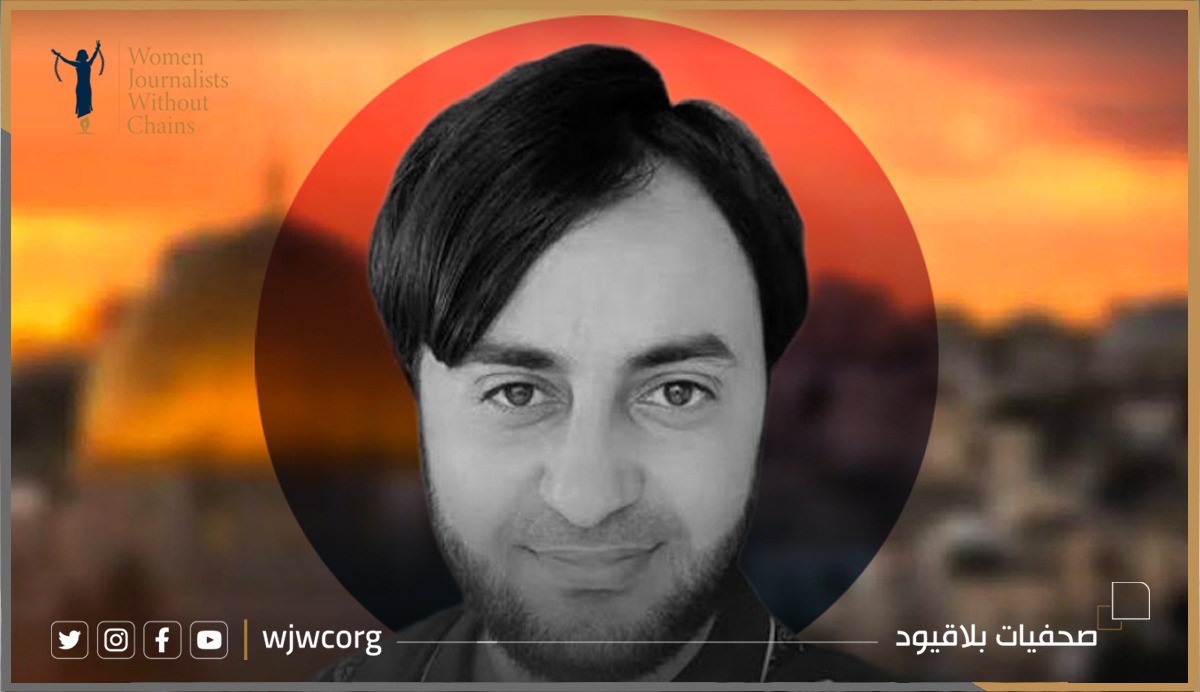
Israeli occupation forces arrested veteran journalist Hassan Abdel Jawad at his home in Bethlehem at dawn on July 1, 2026. Abdel Jawad, 72, is a member of the administrative council of the Palestinian Journalists Syndicate (PJS) and suffers from chronic illnesses.
Given his advanced age and health condition, his detention poses an immediate threat to his life.
His arrest brings the total number of Palestinian journalists currently held in Israeli detention facilities to more than 50. The PJS stated that these systematic arrests of media workers violate international humanitarian law, the Geneva Conventions, and the International Covenant on Civil and Political Rights (ICCPR).
The case of former detainee and journalist Mujahid Bani Mufleh illustrates the catastrophic conditions and deliberate abuse inside Israeli detention facilities. Bani Mufleh, 35, was arrested in June 2025 and released in January 2026. Having entered detention in good health, he emerged six months later having lost nearly 25 kilograms due to systematic starvation. Just two days after his release, he suffered a severe brain hemorrhage that required emergency surgery. Medical reports confirmed that severe beatings by Israeli guards and acute medical neglect in custody caused a dangerous spike in blood pressure, leading to a ruptured brain artery. Publicly released images post-surgery show visible trauma and a portion of his skull removed to relieve brain pressure.
Since the beginning of 2026, human rights organizations have documented dozens of violations against journalists in the West Bank. These abuses include arbitrary arrest and detention, denial of coverage, physical assault, the use of stun grenades and tear gas against press crews, and the confiscation or destruction of equipment. Journalists have also faced expulsion orders from Jerusalem and the Al‑Aqsa Mosque compound, raids and closures of media institutions, and coercive summons for interrogation. Reflecting this sharp escalation, the Palestinian Center for Development and Media Freedoms (MADA) recorded 68 violations in June alone, up significantly from 46 in May.
Recent field data collected over the past two weeks highlights the operational hazards facing media workers on the ground:
· 29 June: Israeli forces arrested journalist Suad Al‑Khawaja from her home in Ni’lin near Ramallah. They raided and vandalized the house, assaulted her brother, confiscated her phone, and transferred her to Hasharon prison on charges of “incitement against Israel” via social media. On the same day, reporter Raghd Abu Safiya of Quds Network was threatened with live fire and prevented from continuing coverage.
· 25 June: Journalist Mu’ath Ghanam was detained in the northern Jordan Valley while documenting Israeli land clearing. His car and equipment were confiscated. He was interrogated twice, forced to lie on the ground, blindfolded, restrained, and had his phone searched before being released after five hours.
· 24 June: Journalist Sami Al‑Sa’i and his son were prevented from traveling via King Hussein Bridge to Jordan for medical treatment, citing “Israeli security restrictions.” They were held from 11:00 a.m. to 1:00 p.m.
· 23 June: Israeli forces fired tear gas at journalists covering a home demolition south of Hebron, including Anadolu photographer Sari Jaradat, journalist Yasser Thalji, Radio Arouba reporter Taha Abu Hussein, Al‑Ghad TV crew members Raed Al‑Sharif and Jamil Salhab, and journalist Musab Shawar.
Systematic Policy of Media Blackout
The targeting of journalists in the West Bank coincides with intensified settlement expansion, including approval of new settlements and extensive land appropriation designating Palestinian land as "state property."
In Gaza, Israeli authorities continue to block independent and international journalists from entering. This isolates Gaza from global coverage and obstructs documentation of atrocities. By the end of June 2026, the death toll in Gaza reached 73,066, including 263 journalists killed since October 2023.
Institutional Position
The arrest of Hassan Abdel Jawad and the detention of over 50 Palestinian journalists blatantly violate international humanitarian and human rights law. This documented pattern of arbitrary arrest, physical assault, equipment destruction, and denial of coverage is a systematic policy to silence Palestinian media and erase its narrative from the public sphere. Weaponizing domestic legislation to criminalize journalism, particularly in occupied Jerusalem, further compounds these violations. Ultimately, the killing of 263 journalists in Gaza since October 2023, coupled with rampant impunity, underscores Israel’s direct responsibility as the occupying power to protect media workers; it simultaneously obligates the international community to step in, enforce accountability, and uphold international law.
Demands Aligned with International Human Rights Principles
|
Demand |
Responsible Actor |
International Legal Principle |
|
Release all arbitrarily detained journalists, media workers, and civilians immediately and unconditionally; end policies of arrest, detention, expulsion, and denial of coverage; and guarantee the safety of media workers. |
Israeli authorities |
Prohibition of arbitrary arrest and detention; protection of journalists in armed conflict and occupation (Geneva Conventions; ICCPR Art. 9; UN Security Council Resolution 2222). |
|
Enable journalists to carry out their work freely and safely, and ensure unrestricted access for local and international media to all Palestinian territories, including Gaza, without restrictions, threats, or persecution. |
Israeli authorities |
Freedom of opinion and expression; right to information; protection of journalists (ICCPR Art. 19; Universal Declaration of Human Rights Art. 19; UN Security Council Resolution 2222). |
|
Investigate all documented violations against Palestinian journalists, including killings, torture, and arbitrary detention, and hold perpetrators accountable under international law. |
United Nations, Human Rights Council, and the international community |
Duty to investigate and prosecute grave breaches of the Geneva Conventions; right to an effective remedy; state responsibility to protect civilians (Geneva Conventions; ICCPR Arts. 2, 6, 7, 9; UN Basic Principles and Guidelines on the Right to a Remedy and Reparation). |
Released by:
Women Journalists Without Chains
Geneva, Switzerland ---July 5, 2026